
Yes, your driving test centre can affects your chance of passing — but it is not the only factor.
Some UK driving test centres have higher pass rates than others because of road layout, traffic levels, local junctions, roundabouts, dual carriageways, hill starts, rural roads, town driving, parking areas and overall route complexity. However, the DVSA does not pass or fail learners based on the test centre. You pass by showing you can drive safely, independently and in line with The Highway Code.
The most important point is this: choosing an “easier” test centre will not guarantee a pass if you are not ready. But choosing a test centre you understand, practising local road types and preparing properly can make a big difference to your confidence.
DVSA publishes official car driving test data for Great Britain, including pass rates overall and by test centre. The latest DVSA car driving test data was updated on 25 June 2026 with data up to March 2026, and DVSA also now publishes driving test waiting time and availability data by test centre.

Why do pass rates change between test centres?
Driving test centre pass rates vary because every area is different. A learner taking a test in a quieter rural area may face different challenges from someone taking a test in a busy city centre.
Common factors include:
- Busy traffic at school-run, commuter or shopping times
- Complex roundabouts and multi-lane junctions
- Narrow residential roads with parked cars
- Dual carriageways and higher-speed roads
- One-way systems and bus lanes
- Hill starts and meeting traffic situations
- Local road markings, yellow box junctions and lane discipline
- Availability of good driving instructors in the area
- Whether learners are taking the test when they are truly ready
This does not mean one centre is “easy” and another is “impossible”. It simply means the driving environment can influence how prepared you need to be.
Preparing for your practical driving test? Try RouteBuddy and start practising smarter before test day.
What does the latest DVSA data show?
DVSA publishes driving test and theory test data for cars, including test volumes, pass rates, waiting times and test centre information. The latest car driving test data was updated on 25 June 2026 with data to March 2026. DVSA also added monthly waiting time and availability data, published on 18 June 2026 with data from January 2019 to May 2026.
DVSA’s Ready to Pass? campaign also highlights that 49 out of every 100 driving tests were failed in Great Britain during May 2026, which shows how important proper preparation is before booking or attending your test.
So, while test centre pass rates are useful, they should be used as a guide — not as the main reason for choosing where to take your test.
Should you choose a test centre with a higher pass rate?
A higher pass rate can be tempting, but it is not always the best choice.
You should think about:
- Can you practise regularly near that test centre?
If you cannot get lessons or private practice in the area, you may be less prepared for the local roads. - Is the centre realistic for your driving ability?
Moving to a rural centre may not help if you struggle with national speed limit roads, bends, country lanes or independent driving. - Can your instructor take you there?
You may need extra travel time, extra lesson costs or a different instructor. - Are you familiar with the road types?
Test success is not about memorising routes. It is about being able to handle whatever comes up safely. - Will changing centre affect your booking?
DVSA introduced new 2026 booking rules, including limits on how many times you can change your test and restrictions on where you can move it.
In most cases, the best test centre is the one where you can prepare properly, practise confidently and take the test when your instructor agrees you are ready.
Important 2026 DVSA booking rule changes
DVSA introduced major changes to car driving test booking rules in 2026. These affect how learners book, manage and change their tests.
The key changes are:
- From 31 March 2026, learners can only make 2 changes to a car driving test booking.
- From 12 May 2026, only the learner driver can book and manage their own test.
- Driving instructors are no longer allowed to book, change, swap or cancel a car driving test for a pupil.
- From 12 May 2026, unofficial services that scan the DVSA booking service for tests are not allowed.
- From 9 June 2026, learners can only move a test to one of the 3 nearest test centres or back to the centre first booked on that current booking.
This makes it even more important to choose your test centre carefully from the start. DVSA advises learners to book at the test centre they intend to use and choose a date they realistically expect to be ready by.
How to book your driving test
You should only book your practical driving test through the official GOV.UK service.
According to GOV.UK, you must book your car driving test yourself. Your driving instructor is not allowed to book it for you, and it is against the law to book a car driving test for someone else. You can book a test up to 24 weeks in the future, and GOV.UK states there is no waiting list or cancellation list.
Before booking, you will need:
- Your UK driving licence number
- A credit or debit card
- Your driving instructor’s personal reference number, if you want to check their availability
You must also have passed your theory test before booking your practical driving test.
What happens during the driving test?
The practical driving test is designed to check whether you can drive safely and independently.
The test includes:
- An eyesight check
- “Show me, tell me” vehicle safety questions
- General driving ability, including independent driving
- A reversing exercise
GOV.UK says you will usually drive for around 35 minutes. You may be asked to follow a sat nav, traffic signs or a combination of both during the independent driving section. Driving test routes are not published, and you are not allowed to use your own sat nav during the test.
To pass, you must make no more than 15 driving faults and no serious or dangerous faults.
What should you take to your driving test?
You must take:
- Your UK driving licence
- Your theory test pass certificate, if you have it
- A suitable car for the test
Most learners use their instructor’s car, but you can use your own car if it meets the DVSA rules. If you do not bring the right things, your test can be cancelled and you may not get your money back.
Top reasons learners fail their driving test
According to DVSA’s official top 10 reasons for failing the driving test, common faults include:
- Not making effective observations at junctions
- Not using mirrors correctly when changing direction
- Not moving off safely
- Incorrect positioning when turning right at junctions
- Not responding appropriately to traffic lights
- Not having proper control of the steering
- Not responding correctly to road markings
- Not responding correctly to traffic signs
- Poor positioning during normal driving
- Not keeping control during reverse parking
These are exactly the areas learners should focus on before test day.
Tips to pass at any driving test centre
1. Do not book too early
Many learners fail because they book before they are genuinely ready. DVSA’s Ready to Pass? guidance says learners are usually ready when they do not need prompts from their instructor, do not make serious or dangerous mistakes, can pass mock tests, have practised managing nerves and their instructor agrees they are ready.
2. Practise the local road types
You do not need to memorise test routes, but you should understand the road types around your chosen test centre. Practise roundabouts, junctions, meeting traffic, parking, dual carriageways and independent driving.
3. Take mock tests
Mock tests help you understand how you perform under pressure. Ask your instructor to run mock tests without prompting, so you can practise making decisions independently.
4. Focus on observation
Observation is one of the biggest reasons learners fail. Check mirrors before changing speed or direction, look properly at junctions, check blind spots when needed and make decisions early.
5. Practise test-day nerves
Nerves can affect even good drivers. Practise breathing techniques, arrive early, sleep properly and avoid last-minute cramming. Confidence comes from preparation, not luck.
6. Learn from local mistakes
Ask your instructor which local areas learners commonly struggle with. This might include a difficult roundabout, a busy crossroads, confusing road markings or a tricky hill start.
7. Use technology to prepare smarter
This is where RouteBuddy can help.
How RouteBuddy can help you prepare
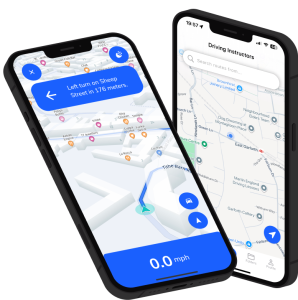
RouteBuddy helps learners build confidence before test day by allowing them to practise driving test centre areas with guided navigation and route planning tools.
With RouteBuddy, learners can:
- Practise routes around their chosen test centre
- Get more familiar with local junctions, roundabouts and road layouts
- Use turn-by-turn navigation
- Save favourite routes
- Build confidence with independent driving
- Use CarPlay and Android Auto support where available
RouteBuddy is not a replacement for professional lessons with an approved driving instructor. It should be used as a preparation tool to support your learning, build confidence and help you understand the area around your test centre.
Preparing for your practical driving test? Download RouteBuddy and start practising smarter before test day.


Final answer: Does the test centre affect your chance of passing?
Yes, the driving test centre can affect your experience because some areas have more challenging roads, heavier traffic and lower pass rates. But the test centre does not decide your result — your driving does.
The best way to improve your chance of passing is to choose a realistic test centre, practise local road types, take mock tests, follow DVSA guidance and only take your test when you are genuinely ready.
A higher pass rate might look attractive, but proper preparation is what gives you the strongest chance.
FAQs
Does the driving test centre affect your pass rate?
Yes, pass rates vary between test centres because local roads, traffic, junctions and route complexity are different. However, you still need to meet the same DVSA standard wherever you take your test.
Which driving test centre is easiest to pass at?
There is no guaranteed “easy” test centre. Some centres have higher pass rates, but you should choose a centre where you can practise properly and where your instructor agrees you are ready.
Should I change to a test centre with a higher pass rate?
Only if it makes sense for your preparation. If you cannot practise in that area, changing centre may not help. DVSA’s 2026 rules also limit how many changes you can make and where you can move your test.
Can my driving instructor book my test for me?
No. Under the 2026 DVSA rules, only the learner driver can book and manage their own car driving test.
How many times can I change my driving test?
For car driving tests, DVSA now allows only 2 changes to a booking. If you need more changes after that, you must cancel and book again.
Can I use a driving test cancellation app?
DVSA says learners are not allowed to use unofficial services that scan the driving test booking service for appointments, including cancellation finder websites or apps.
How long does the driving test last?
The standard car driving test usually includes around 35 minutes of driving.
How many minor faults can you get and still pass?
You can pass with no more than 15 driving faults, as long as you make no serious or dangerous faults.
What should I practise before my driving test?
Focus on observations, mirrors, junctions, roundabouts, road positioning, traffic lights, road signs, road markings, reversing and independent driving. These are common areas where learners lose marks.
How can RouteBuddy help before my test?
RouteBuddy helps you practise around your chosen test centre, build confidence with local roads and improve your preparation with guided navigation, saved routes and smart route practice.